Information behind the QR code on the memorial plaque · English version
A Frankfurter in the 20th Century

Fig. 1: Hermann Zvi Aronheim as a young man.
Note on the use of names: In the course of his life, Hermann Zvi Aronheim went by several different names. In Palestine and Israel he was known as Zvi Aharoni; later he lived under the name Hermann Arndt. In the text below, the names are used according to the respective phases of his life. For the sake of consistency, Hermann Arndt is used predominantly, as he bore this name until the end of his life.
Hermann Zvi Aronheim was born on 6 February 1921 in a clinic at the corner of Bahnhofstraße and Spiekerstraße in Frankfurt (Oder). He later lived under the name Zvi Aharoni in Palestine and Israel. After moving to England he called himself Hermann Arndt. His father, Heinrich Aronheim (1880–1937), was a lawyer; his mother, Eugenie, née Simon (1888–1980), arranged the family's emigration after her husband's death. Hermann Arndt had two brothers, Hans Josef and Peter Michael.
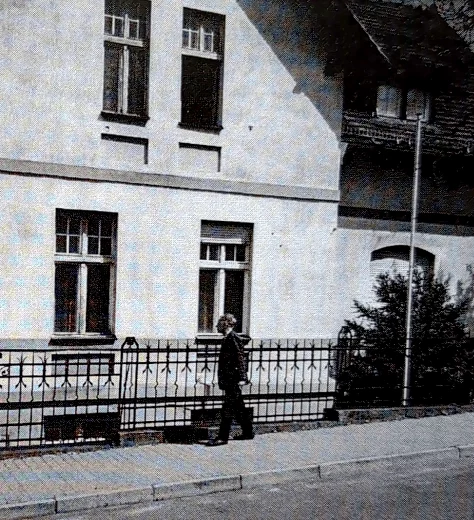
Fig. 2: Hermann Arndt in front of the house at Ferdinandstraße 15 in Frankfurt (Oder) during a visit in 1994
The family lived in a house at Ferdinandstraße 15. Hermann first attended the primary school on Fürstenwalder Straße in 1927 and, from 1930, the Friedrichsgymnasium on Gubener Straße. In his later letters, Hermann Arndt described the antisemitic discrimination he had experienced during his school years. In view of the growing National Socialist persecution, his elder brother Hans Josef had already emigrated to Palestine in 1933. In 1935 the family left Frankfurt (Oder) and moved with Hermann and Peter to Berlin. The house on Ferdinandstraße was sold. After attending the Goldschmidt School in Berlin, Hermann Aronheim began an apprenticeship as a bricklayer in 1936.
After his father's death in 1937, his mother arranged the family's departure. In 1938 Hermann Aronheim emigrated via Amsterdam, London and Paris to Palestine. There, as Zvi Aharoni, he first lived with his brother at Kibbutz Alonim near Haifa and worked in agriculture. In 1941 he married Ursula Neumann, who came from Berlin. The following year he joined the British Army, where he worked, among other things, as a German–English translator. Aharoni experienced the end of the Second World War in 1945 in Florence and Vienna. In 1946 he was discharged from British military service.
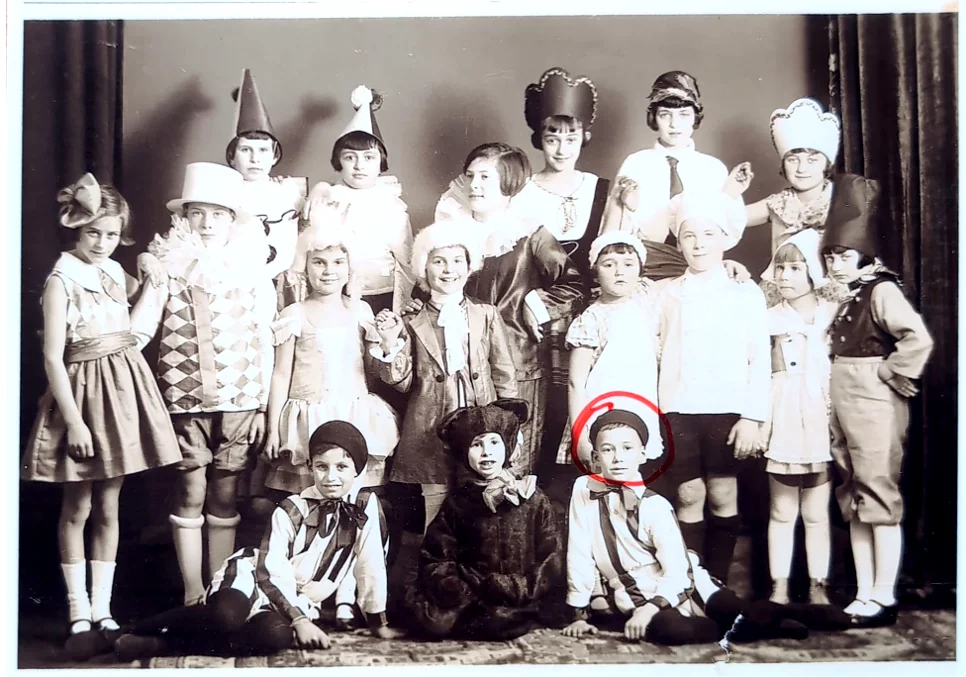
Fig. 3: Class photograph from his school days; Hermann is marked.
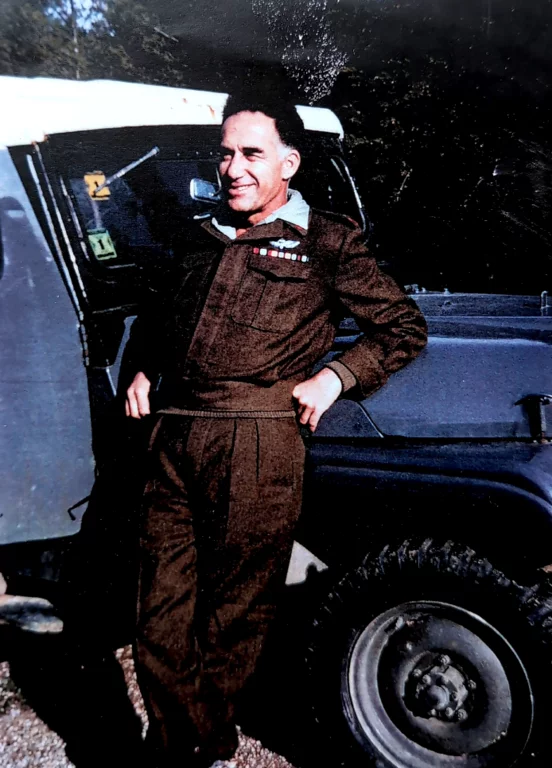
Fig. 4: Zvi Aharoni during his military years in England, 1944.
After the war, Aharoni lived in Haifa, studied architecture at the Technion and took part in Israel's War of Independence. In 1948 he joined Shin Bet, Israel's domestic security service. He later worked for Mossad, Israel's foreign intelligence service. In 1960 he played a central role in the search for Adolf Eichmann in Argentina. The tracking down and abduction of Eichmann from Buenos Aires to Israel, in which Zvi Aharoni played a major part, became one of the best-known cases of post-war history. Eichmann's trial took place in Jerusalem in 1961.
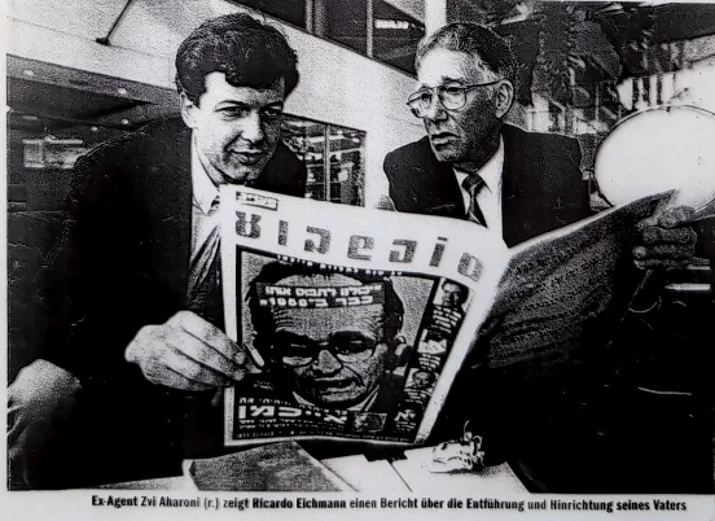
Fig. 5: Zvi Aharoni and Ricardo Eichmann reading together a report on the abduction and execution of Adolf Eichmann.
In 1962 Aharoni took charge of a unit searching for the SS doctor Josef Mengele in Brazil. After returning to Israel in 1964, he helped to build up Mossad's "Internal Security and Training" department.
In 1970 Aharoni left Mossad. In the following years his work took him to China as the representative of a Swiss bank. In 1973 he met his second wife, Val, and moved with her to London in 1974. In 1976 he returned to Israel and founded his own detective agency in Tel Aviv.
When his mother, Eugenie, died in 1980 at the age of 92, he left Israel and went to China once again with his wife Val. In 1985 he finally settled down in Devon, in south-west England.
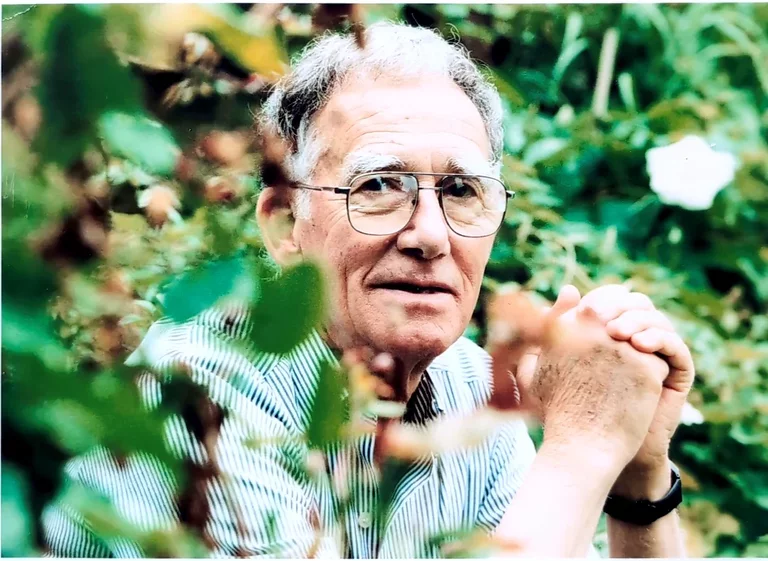
Fig. 6: Zvi Aharoni in later years.
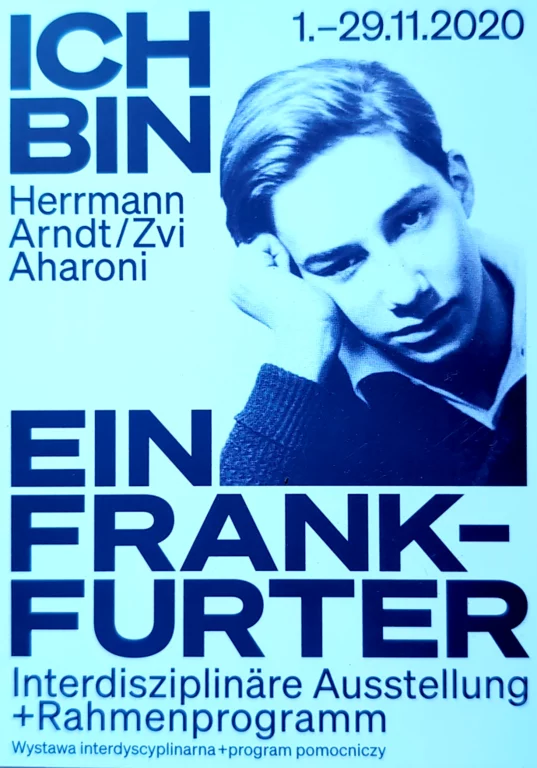
Fig. 7: Exhibition poster "Ich bin ein Frankfurter" ("I am a Frankfurter") about Hermann Arndt / Zvi Aharoni.
More than five decades after his emigration, a renewed connection arose between Hermann Arndt and his home town. In 1993, on the occasion of the 300th anniversary of the Friedrichsgymnasium in Frankfurt (Oder), the first contact by letter was made, initiated by Peter Staffa. From then on Hermann Arndt corresponded with pupils of the school. He visited his former school as early as 1994. In 2000, on his initiative, a memorial plaque for two murdered fellow pupils was installed in the school's assembly hall. On this occasion he expressed his enduring bond with his home town in a memorable sentence: "Ich bin ein Frankfurter" ("I am a Frankfurter").
Hermann Arndt died on 26 May 2012 in south-west England. His life story connects the history of the city of Frankfurt (Oder) with the deep ruptures of the 20th century: a Jewish childhood in Germany, forced emigration, building a new life in Palestine and Israel, involvement in the reckoning with National Socialist crimes, and a late, cautious yet lasting return to the memory of the city.
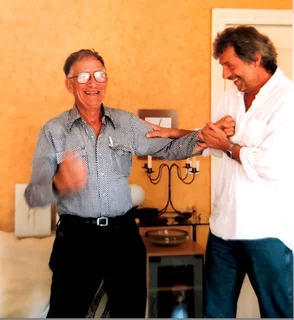
Fig. 8: Hermann Arndt with Peter Staffa, who initiated the contact between pupils of the Friedrichsgymnasium and Arndt (c. 2000).